
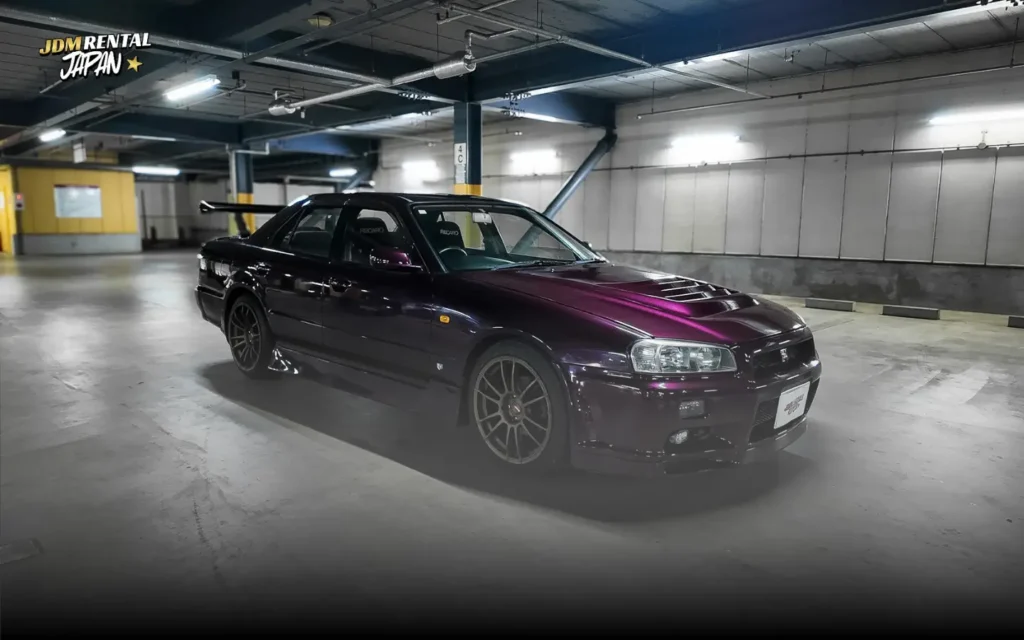
Tokyo may be the starting point of your JDM experience, but the most memorable driving begins once the city skyline disappears in your rear-view mirror.
For car enthusiasts, taking a performance car onto Japan’s mountain passes and coastal highways delivers an experience trains cannot replicate: complete control over the route, access to legendary touge (mountain pass) roads, and the freedom to pull over whenever the scenery demands a photo.
From the technical elevation changes of the Hakone Turnpike to the wide-open scenic routes around the Fuji Five Lakes and the coastal sweeps of the Izu Skyline, here is everything you need to know to plan a safe, memorable, and legally compliant JDM road trip from Tokyo.
Route Comparison at a Glance
| Route | Best For | Suggested Duration | Iconic Roads & Highlights |
| Tokyo → Hakone | Mountain elevation & driving dynamic | Full Day (8–10 hrs) | Anest Iwata Turnpike, Ashinoko Skyline, Lake Ashi |
| Tokyo → Mount Fuji Area | Automotive photography & cruising | Full Day (8–10 hrs) | Chuo Expressway, Lake Yamanakako, Panorama Dai |
| Tokyo → Hakone → Izu | Dedicated driving enthusiasts | 2 Days (Overnight) | Izu Skyline, Nishi-Izu Coastline, Mount Amagi |
| Tokyo Bay & C1 Loop | Night cityscape & urban driving | Evening (3–4 hrs) | Shuto Expressway (C1 Inner Loop), Rainbow Bridge, Bayshore Route (Wangan) |
| Daikoku PA Run | Car culture observation | Evening (2–3 hrs) | Daikoku Futo Parking Area, Yokohama Bay Bridge |
1. Tokyo to Hakone: The Classic Mountain Pass (Touge)
Hakone is the benchmark mountain drive outside Tokyo. The transition begins on the high-speed Tomei Expressway before climbing into private toll roads featuring wide sweepers, technical hairpins, and significant elevation shifts.
- Key Roads: Anest Iwata Turnpike Hakone (Hakone Turnpike), Ashinoko Skyline, and Hakone Skyline.
- Highlights: Stop at the Sky Lounge at the summit of the Turnpike for local automotive gatherings, coffee, and clear views of Mount Fuji over Lake Ashi.
- Driving Character: High-traction asphalt with elevation climbing over 1,000 meters. Demands confident braking and gear selection on descents.
- Best Car Match: Lightweight, balanced sports platforms (such as the Mazda RX-7, Toyota GR86, or Nissan Silvia) where chassis balance matters more than raw highway horsepower. Review our complete JDM rental guide for full route planning and preparation tips.
2. Tokyo to Mount Fuji: Photography & Open Cruising
If your objective is equal parts automotive photography and scenic open roads, the Fuji Five Lakes (Fujigoko) region offers wide, accessible driving away from tight hairpins.
- Key Roads: Chuo Expressway to the Fuji Subaru Line, or south via the Tomei Expressway to the Fuji Five Lakes Road.
- Highlights: Lake Yamanakako Panorama Dai (unobstructed elevated views of the car with Fuji in the background) and Lake Kawaguchiko’s northern shore.
- Driving Character: Relaxed cruising, wide two-lane asphalt, and moderate elevation changes.
- Best Car Match: Grand tourers with ample torque and highway comfort, such as the Nissan Skyline GT-R (R32–R34), Toyota Supra (A80/A90), or modern performance coupes. If a classic GT-R or Silvia is your vehicle of choice, browse available Nissan JDM cars to match your route.
3. Hakone to Izu Peninsula: The Multi-Day Driving Tour
Extending your drive south from Hakone down the spine of the Izu Peninsula transforms a simple day outing into an authentic Japanese grand tour.
- Key Roads: Izu Skyline (toll road along the mountain ridge) connecting to Route 135 (coastal) or Route 414 (central mountain pass).
- Highlights: Dramatic coastal cliffs along the Jogasaki Coast, panoramic views of Sagami Bay, and sweeping curves free of stop-and-go city traffic.
- Driving Character: Varied terrain ranging from high-speed ridge lines to narrow coastal village bypasses.
- Best Car Match: Modern sports coupes with dependable cooling, strong mid-range torque, and automatic or manual gearboxes suited to extended seat time.
4. Tokyo Bay & Daikoku PA: Nighttime Car Culture
For tight itineraries, an evening drive on the capital’s elevated expressways reveals Japan’s urban automotive landscape.
- Key Roads: Shuto Expressway Inner Circular Route (C1), Bayshore Route (Wangan-sen), and the Yokohama Bay Bridge.
- Visiting Daikoku PA: Daikoku Parking Area (located on Daikoku Pier in Yokohama) is a functioning highway rest stop, not a private meet venue. If you prefer a guided group outing without navigating highway closures on your own, consider booking a dedicated Daikoku Experience.
- Important Protocol: Police frequently close the parking area on Friday and Saturday nights around 8:30 PM–9:30 PM to manage noise and overcrowding. Maintain low speeds in the rest area, never rev engines or perform burnouts, and park only in designated passenger car spaces.
Essential Logistics for International Drivers
Driving a performance vehicle in Japan requires strict adherence to local documentation, fuel, and payment systems. Before planning a route, make sure you understand the core rules for driving a JDM car in Tokyo as a tourist.
- Driving Permits & Licensing Requirements
- 1949 Geneva Convention IDP: Visitors from countries adhering to the 1949 Geneva Convention (e.g., USA, UK, Canada, Australia) must carry a physical International Driving Permit alongside their physical home-country driver’s license and passport.
- JAF Official Translation: Drivers with licenses issued in France, Germany, Switzerland, Belgium, Monaco, or Taiwan cannot use a standard IDP. They must present an official Japanese translation processed through the Japan Automobile Federation (JAF) alongside their national license. For specific edge cases and license validity, check the JDM Rental Japan FAQs.
- Toll Roads & ETC Cards
- Most tollways (Tomei, Chuo, Shuto Expressway) rely heavily on the Electronic Toll Collection (ETC) system.
- Ensure your rental provider supplies an active ETC card inserted into the in-car reader. Without an ETC card, you must use manual toll gates labeled “一般” (General/Cash), which slows down travel significantly and may not accept foreign credit cards.
- Fueling Performance Cars
- JDM turbocharged and high-compression performance engines require Premium / High-Octane Fuel.
- When pulling into a Japanese service station, look for the Yellow Pump Nozzle, labeled ハイオク (Haioku). Never use Regular (Red nozzle) or Diesel (Green nozzle).
- Speed Enforcement & Road Safety
- Japanese expressways and mountain toll roads use both fixed automated speed cameras (Orbis) and unmarked police patrol cars (Fukumen).
- Mountain roads (touge) are public thoroughfares shared with local residents, cyclists, and sightseeing tour buses. Keep within your lane, observe posted limits, and keep spirited driving strictly within safe, legal boundaries.
Planning Your Vehicle Selection
When you explore available JDM cars for rent in Japan, make sure to align the chassis with the terrain:
- For Tight Mountain Passes (Hakone, Ashinoko): Focus on light curb weight, intuitive steering response, and manageable dimensions.
- For Long-Distance Touring (Izu, Fuji): Prioritize cabin comfort, functioning air conditioning/heating, dependable cooling systems, and highway stability.
- Transmission Choice: Only reserve a manual transmission if you are completely confident operating a right-hand-drive manual vehicle on steep mountain inclines while managing left-side traffic flow.
Ready to hit the touge? Secure your vehicle selection early and book your JDM car ahead of your trip to guarantee availability.
FAQ
What is the best single-day driving route from Tokyo?
The Tokyo-to-Hakone loop via the Tomei Expressway and the Hakone Turnpike offers the best mix of mountain elevation, road quality, and scenic vistas within an 8-to-10-hour round trip.
Can foreign tourists rent manual JDM performance cars in Japan?
Yes, provided you meet the rental agency’s minimum age requirements and present a valid passport, domestic driver’s license, and an eligible 1949 Geneva Convention IDP (or JAF translation where applicable).
How much should I budget for tolls on a Hakone or Fuji road trip?
Expect between ¥4,000 and ¥8,000 round-trip for expressway tolls (Tomei or Chuo), plus an additional ¥700 to ¥2,000 for private scenic toll roads such as the Hakone Turnpike or Ashinoko Skyline.