31 August 2026 · 9 min read · JDM Rental Japan
Driving on Japan’s Expressways: Tolls, ETC and Rules
Japan’s expressway network can turn a JDM rental into one of the most memorable ways to experience the country. From Tokyo’s elevated highways to the Tomei Expressway toward Hakone and the Chuo Expressway toward Mount Fuji, many of Japan’s best driving destinations are easier to reach by car.
But driving on Japanese expressways is different from simply following a navigation app.
International drivers need to understand ETC toll cards, toll gates, speed limits, lane rules, parking, service areas, road signs, and local driving etiquette before setting off.
If you are planning to rent a JDM car in Japan, this guide covers the practical road knowledge that will make your trip smoother, safer, and easier to plan.
Quick guide to driving on Japan expressways
Japan’s expressways are primarily toll roads. Drivers can normally pay through an ETC card or use eligible manual toll lanes. JDM Rental Japan currently states that its vehicles include ETC/toll cards, with toll charges calculated after the vehicle is returned.
Before driving, remember:
- Japan drives on the left side of the road
- Follow the posted speed limit
- Keep your ETC card correctly inserted if using ETC lanes
- Do not enter ETC-only gates without a functioning ETC setup
- Use designated parking areas rather than stopping roadside
- Take breaks at service areas on longer drives
- Keep your passport, domestic license and valid driving authorization with you
- Never use a mobile phone while driving
Japan’s National Police Agency specifically emphasizes left-side driving, obeying traffic signals, stopping at stop signs and following posted road restrictions.
What is an ETC card in Japan?
ETC stands for Electronic Toll Collection.
It is an electronic payment system used across Japanese expressways. An ETC card sits inside the vehicle’s ETC reader and allows toll charges to be recorded automatically as the car passes through compatible toll gates.
Instead of stopping to make a manual payment, the vehicle can pass through the ETC lane at the instructed speed.
For travelers taking several expressway journeys, this makes road trips significantly easier.
According to the Japan National Tourism Organization, expressway tolls can be paid through manual lanes or electronically using ETC, and rental-car users normally settle accumulated ETC charges with their rental company.
Does JDM rental Japan provide ETC cards?
JDM Rental Japan currently states that all its cars are equipped with an ETC/toll card, with charges calculated after the vehicle is returned.
That is especially useful if your itinerary includes routes toward:
- Hakone
- Mount Fuji
- Yokohama
- Izu Peninsula
- Daikoku Parking Area
- Tokyo Bay
- Chiba
- Longer highway road trips
Before departure, still confirm how toll settlement works for your exact booking.
How Japan expressway toll gates work
You will generally encounter different toll-lane types when entering or exiting Japanese expressways.
ETC lanes
ETC lanes are intended for vehicles with a working ETC card and reader.
When approaching:
- Slow down.
- Maintain appropriate spacing.
- Enter the marked ETC lane.
- Allow the system to recognize the card.
- Continue only after the barrier permits passage.
Do not assume that every toll lane accepts every payment method.
Manual toll lanes
Manual lanes can be used when ETC is unavailable.
Depending on the road and gate, payment methods may vary.
For a visitor unfamiliar with Japanese toll systems, using an ETC-equipped rental is generally much easier than repeatedly dealing with manual booths.
How much are expressway tolls in Japan?
There is no single flat toll for driving on Japan’s highways.
Your total depends on:
- entry point
- exit point
- expressway operator
- distance
- vehicle class
- route
- time or discount eligibility
- private toll roads used during the trip
JNTO notes that Japan’s expressways and other major routes commonly charge tolls and that the total depends on the road and distance travelled.
For a performance-car road trip, factor tolls into your budget alongside:
- rental rate
- fuel
- parking
- insurance
- seasonal surcharges
- accommodation
If you are still estimating overall trip costs, read our JDM car rental Japan guide, which covers rental planning and additional expenses in more detail.
Japan expressway speed limits in 2026
Do not rely on assumptions from your home country.
Always follow the posted speed-limit signs.
Speed limits can vary according to:
- road
- weather
- traffic conditions
- construction
- vehicle type
- temporary restrictions
The National Police Agency instructs drivers to obey posted speed-limit signs.
A particularly important update took effect on September 1, 2026: the statutory speed limit on qualifying residential roads without a center line was reduced to 30 km/h unless a different speed is posted.
That change concerns applicable local roads rather than expressways, but it matters when leaving highways and entering residential areas on your JDM road trip.
Don’t treat a JDM rental like a racetrack
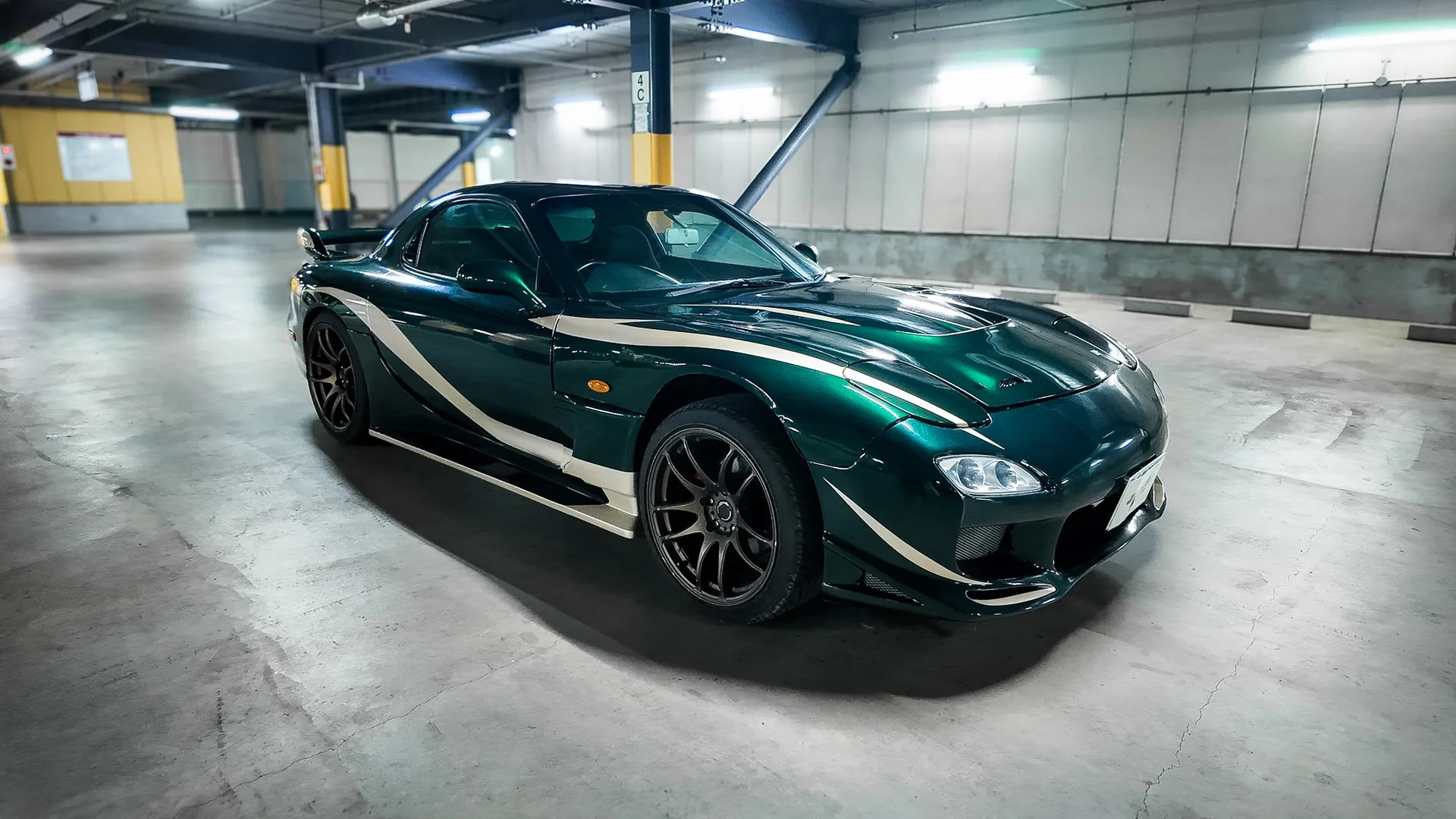
Cars such as the Nissan GT-R, Toyota Supra, RX-7 and Skyline can make legal highway speeds feel effortless.
That does not change the law.
Performance-car renters should be especially disciplined because:
- acceleration builds speed quickly
- unfamiliar roads reduce reaction time
- right-hand-drive controls may initially feel different
- tourists may misread junctions or lane positioning
The goal is to experience the vehicle and Japan’s road culture, not turn public roads into a circuit.
Keep left on Japanese roads
Japan uses left-hand traffic.
For drivers from the USA, Canada, continental Europe and many other countries, this may require conscious adjustment during the first few hours.
Be especially careful when:
- turning after leaving a parking lot
- entering a quiet road with no traffic
- approaching roundabouts
- exiting service areas
- making right turns
- joining expressways
The National Police Agency explicitly identifies keeping left as one of the fundamental rules foreign drivers must understand.
If this is your first time driving in the country, also read our car rental in Japan for foreigners guide.
Understanding Japanese road signs
Major roads are relatively manageable for international visitors because important destinations are often shown in English, although rural roads may have less English signage.
Some signs deserve particular attention.
Stop sign
Japanese stop signs use an inverted red triangle.
You must come to a complete stop.
No entry
Do not enter the road from the restricted direction.
Speed limit
The displayed number indicates the maximum permitted speed.
No parking
Parking is prohibited in the designated area.
No stopping or parking
Neither stopping nor parking is allowed.
Directional lane arrows
Use the designated lane for your intended direction.
The National Police Agency provides official guidance explaining these signs and road markings for foreign drivers.
Parking in Japan
Parking is one of the areas where visitors most often underestimate the complexity of driving in Japan.
In busy areas of Tokyo, Yokohama and other cities, you should plan where you will park before arriving.
Avoid assuming you can simply stop along the street.
JNTO warns that parking can be difficult in urban areas and that penalties can apply when vehicles are not parked in designated spaces.
Common options include:
- coin parking
- hotel parking
- shopping-center parking
- destination-specific parking lots
- expressway parking areas
- service areas
Coin parking
Coin-operated parking lots are widespread in Japanese cities.
The basic process is usually:
- Park in an available numbered bay.
- Note the bay number.
- Return to the payment machine before leaving.
- Enter the parking-space number.
- Pay the displayed amount.
- Exit according to the system instructions.
Systems vary, so check the signs carefully.
Service areas and parking areas
Japanese expressways are famous for their Service Areas (SA) and Parking Areas (PA).
They are much more than basic roadside stops.
Depending on the location, you may find:
- restrooms
- restaurants
- convenience stores
- regional food
- souvenirs
- fuel
- vending machines
- scenic viewpoints
- tourism information
JNTO recommends using service areas for regular rest breaks and notes that many offer food, shops and local products.
For a long JDM drive, they are part of the experience rather than simply a place to refuel.
What about Daikoku parking area?
Daikoku PA is one of Japan’s best-known automotive gathering points, but it is still a functioning expressway parking area.
It should not be treated as a permanent organized car show.
Access conditions can change, and the area may be closed or restricted at certain times.
If your main reason for visiting Japan is to experience Tokyo’s automotive scene without planning the expressway navigation yourself, consider the dedicated Daikoku Tour.
For travelers who prefer to drive independently, our Tokyo JDM road trip guide also includes Daikoku PA, Hakone, Izu and Mount Fuji route ideas.
Best expressways for a JDM road trip from Tokyo
Several major roads connect Tokyo with enthusiast-friendly destinations.
Tomei expressway
Useful for routes toward:
- Hakone
- Gotemba
- Mount Fuji
- Shizuoka
It is a natural starting route for a mountain-focused JDM road trip.
Chuo expressway
Commonly used for:
- Mount Fuji area
- Fuji Five Lakes
- Yamanashi
This route works particularly well for scenic driving and automotive photography trips.
Shuto expressway
Tokyo’s metropolitan expressway network provides access to:
- Tokyo Bay
- Yokohama
- Wangan routes
- Daikoku PA connections
Urban expressway driving requires greater concentration because of junctions, lane changes and traffic density.
Izu Skyline and scenic toll roads
For enthusiasts continuing beyond Hakone, the Izu Peninsula offers scenic toll roads and mountain routes that differ significantly from central Tokyo driving.
Our detailed JDM road trips from Tokyo guide compares these routes by driving character and trip length.
Choosing the right JDM car for expressway driving
The “best” JDM car depends on what your itinerary actually involves.
Nissan GT-R
Suitable for drivers wanting:
- strong highway stability
- high torque
- effortless overtaking response
- modern performance
Toyota Supra
Well suited to:
- long highway cruising
- mixed road trips
- performance-focused touring
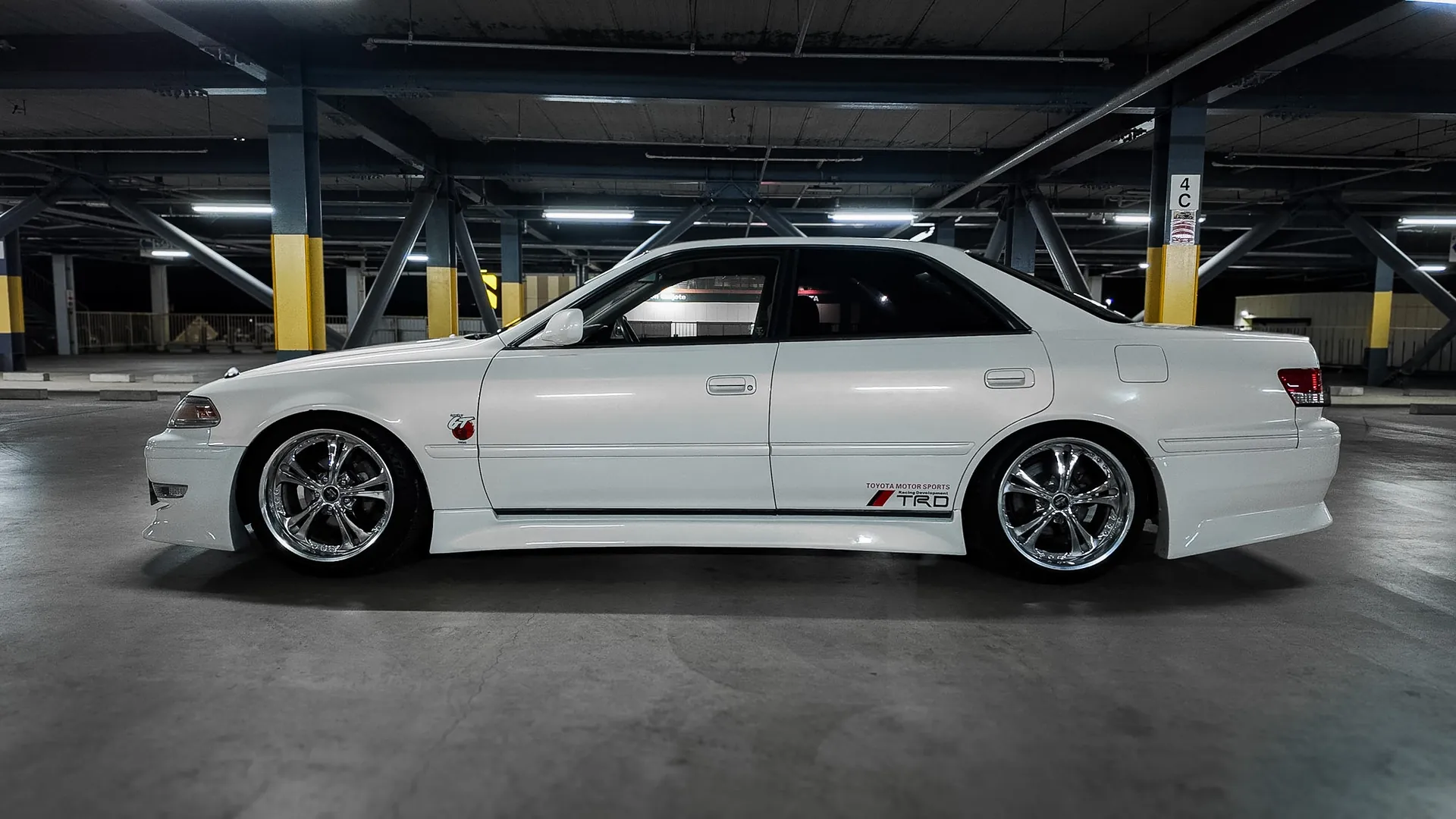
Nissan Skyline
A strong choice if you want the cultural connection of an iconic JDM platform combined with highway cruising.
Mazda RX-7
Better suited to enthusiasts prioritizing:
- lightweight handling
- mountain roads
- analog driving feel
Subaru WRX STI
A practical option for routes combining:
- mountain driving
- changing weather
- longer touring
- AWD confidence
You can compare the current vehicles on the JDM Rental Japan fleet. The fleet includes both classic and modern performance cars from Nissan, Toyota, Subaru, Mazda and Honda.
Fuel stops and performance cars
Performance cars can consume significantly more fuel than ordinary economy rentals.
Do not wait until the tank is almost empty before looking for a station.
Before leaving the rental location, confirm:
- required fuel grade
- fuel-door release
- whether the vehicle takes premium gasoline
- return fuel policy
Different JDM vehicles have different requirements, so follow the instructions provided for the exact car you rent.
Driving documents to carry
Expressway rules do not replace Japan’s licensing requirements.
Foreign visitors generally need the appropriate combination of:
- passport
- original domestic driver’s license
- valid International Driving Permit where applicable
or, for qualifying license jurisdictions:
- original license
- authorized Japanese translation
The National Police Agency states that qualifying foreign drivers need an appropriate IDP or eligible foreign license with translation, subject to the applicable validity period.
For the full requirements, read our guide for foreign car renters in Japan before booking.
Expressway safety tips for first-time JDM drivers
A few habits will make your first Japanese highway trip substantially easier:
- Set your navigation before moving.
- Confirm that the ETC card is functioning.
- Keep left except where overtaking rules and signage allow otherwise.
- Watch lane signs early when approaching complicated junctions.
- Leave additional following distance.
- Take regular breaks.
- Do not hold or operate your phone while driving.
- Never drive after drinking alcohol.
- Reduce speed in rain or poor visibility.
- Leave extra time instead of rushing back to the rental location.
Japan’s National Police Agency specifically identifies speeding, drunk driving, illegal mobile-phone use and illegal parking among serious traffic-enforcement priorities.
A simple JDM expressway trip plan
For a first-time visitor, this structure works well:
Day 1: Tokyo or Narita pickup
Collect your rental, become comfortable with:
- right-hand-drive controls
- mirrors
- indicators
- navigation
- ETC reader
Avoid making your first 20 minutes of right-hand-drive experience the most complex expressway junction in Tokyo.
Day 2: Tokyo to Hakone or Fuji
Use the expressway for the longer transit section, then enjoy the destination at a relaxed pace.
Day 3: Scenic driving
Explore routes appropriate for your vehicle and comfort level.
Day 4: Return toward Tokyo
Leave enough time for:
- traffic
- fuel
- ETC settlement
- final inspection
- unexpected delays
If you need route inspiration, see the complete Hakone, Izu and Mount Fuji JDM road-trip guide.
Frequently asked questions
Plan your JDM road trip in Japan
Driving Japan’s expressways puts destinations such as Hakone, Mount Fuji, Yokohama, Izu and Tokyo Bay within reach while giving you something public transport cannot provide: control over the journey.
The key is preparation.
Understand your ETC setup, obey posted road rules, plan parking and fuel stops, and choose a car that fits the route rather than simply selecting the most powerful option.
When you’re ready, explore the JDM car rental fleet in Japan or reserve your JDM car online.
Do I need an ETC card to drive on Japan expressways?
Not necessarily, because some toll roads provide manual payment options. However, ETC makes expressway travel significantly easier. JDM Rental Japan currently states that its vehicles are equipped with ETC/toll cards.
Are Japan’s expressways free?
No. Most major expressways require toll payments, with charges generally based on the road, vehicle class and distance travelled.
Can tourists drive on Japanese expressways?
Yes, provided they are legally permitted to drive in Japan and meet the rental provider’s requirements.
Can I drive a Nissan Skyline or GT-R on Japanese highways?
Yes, a road-legal rental vehicle can be driven on public expressways subject to the same traffic laws and rental conditions as other vehicles.
Are Japanese road signs in English?
Major destinations on important roads are often signposted in English, although English signage may be more limited in rural areas.
What side of the road does Japan drive on?
Japan drives on the left.
Can I park anywhere beside the road in Japan?
No. Parking restrictions are actively enforced, particularly in urban areas. Use designated parking facilities and follow local signage.