1 September 2026 · 11 min read · JDM Rental Japan
What Does JDM Mean? Japanese Domestic Market Explained
Spend enough time around Japanese cars and you will hear three letters constantly: JDM. They appear in car listings, YouTube videos, tuning shops, social posts and conversations about everything from Nissan Skylines to Honda Civics, and the term has become so widely used that it is sometimes applied to almost any Japanese performance car.
Technically, though, JDM has a much more specific meaning.
JDM stands for Japanese Domestic Market. In automotive terms, it refers to vehicles, specifications and parts originally intended for sale within Japan. That means a Japanese badge alone does not automatically make a car JDM. A Toyota built specifically for the American market is still a Japanese-brand car, but it is not technically a Japanese Domestic Market vehicle.
That distinction might sound minor until you start comparing engines, transmissions, trim levels, equipment and even model names between Japanese and export versions. That is where JDM becomes interesting.
What does JDM stand for?
JDM means Japanese Domestic Market. The phrase describes products created for Japan’s home market rather than specifically for export. In the automotive world, it can refer to complete vehicles, engines, transmissions, factory trim levels, wheels, electronic components, performance parts and accessories. A true JDM vehicle was therefore originally sold for use in Japan.
Today, enthusiasts sometimes use “JDM” more loosely to describe Japanese performance-car culture in general. That usage is common and understandable, but it is different from the technical meaning.
JDM meaning in simple terms
A useful way to remember it: a Japanese car is made by a Japanese manufacturer, while a JDM car was originally configured and marketed for the Japanese domestic market. Those categories often overlap, but they are not identical.
Is every Japanese car a JDM car?
No, and this is probably the biggest misunderstanding surrounding JDM cars.
Imagine Nissan builds one version of a model for customers in Japan and another version specifically for customers in another country. Both are Nissan vehicles, and both may even come from Japan, but only the Japanese-market version is technically JDM.
Manufacturers adjust cars for different markets because countries have different regulations, customer preferences, fuel standards, equipment requirements and product strategies. As a result, two vehicles that look almost identical from the outside may have meaningful differences underneath. That is one reason enthusiasts often pay close attention to chassis codes, engine codes and original specifications rather than relying only on the badge attached to the trunk.
What makes a car truly JDM?
There is no magical badge that turns a car into a JDM vehicle. The important question is its original intended market, and several factors usually help identify a genuine Japanese-market vehicle.
1. It was originally sold for Japan
This is the most important factor. If the vehicle was originally configured and sold through the Japanese market, it fits the traditional definition of JDM. Cars imported from Japan years later do not become JDM because they were imported. They were already Japanese-market vehicles before leaving the country.
2. It may have Japan-specific specifications
Japanese-market versions sometimes received combinations that were unavailable overseas. Depending on the model and generation, differences could include engines, turbocharger configurations, transmissions, suspension, interior trim, electronics, factory options, body styles, emissions equipment and even model names. Not every JDM car is dramatically different from an export version, but some differences can be substantial.
3. It is usually right-hand drive
Japan drives on the left, so most Japanese domestic vehicles are right-hand drive. However, right-hand drive by itself does not prove a car is JDM. Countries such as the United Kingdom, Australia and New Zealand also use right-hand-drive vehicles. Market origin matters more than steering-wheel position.
Why are JDM cars so popular?
A three-letter market classification would probably never have become part of global car culture if the cars themselves were forgettable. They were not.
Japanese manufacturers produced an extraordinary range of performance cars during the late twentieth and early twenty-first centuries. Some were technologically ambitious, others were lightweight and mechanically simple, and many combined reliable engineering with platforms that responded extremely well to modification. Cars such as the Nissan Skyline, Toyota Supra, Mazda RX-7, Honda NSX, Mitsubishi Lancer Evolution, Subaru Impreza WRX STI and Nissan Silvia developed identities far beyond ordinary transportation, becoming enthusiast cars in their own right.
Motorsport, tuning culture, magazines, video games, films and the internet then carried those cars far beyond Japan. For many enthusiasts outside the country, their first encounter with an R34 Skyline or FD RX-7 did not happen on an actual road. It happened through a television screen, PlayStation, automotive magazine or poster. Years later, the possibility of seeing, or actually driving, those cars in Japan has turned automotive tourism into a genuine reason people visit the country.
The JDM cars that defined an era
There is no single list capable of representing the entire Japanese Domestic Market, because JDM includes everything from tiny kei cars to luxury sedans. But when enthusiasts discuss classic JDM performance, several names repeatedly appear.
Nissan Skyline
Few Japanese cars have achieved the international reputation of the Skyline. Different Skyline generations offered very different experiences, but the GT-R versions in particular became famous for turbocharged straight-six power, sophisticated drivetrain technology and motorsport success. The R32, R33 and R34 generations remain major reference points in modern Japanese-car culture, and the Skyline name has become so recognizable that even non-enthusiasts often associate the R34 shape with JDM.
If you want to explore how the Skyline compares with other icons, see our guide to the best JDM legend cars to drive in Japan.
Toyota Supra
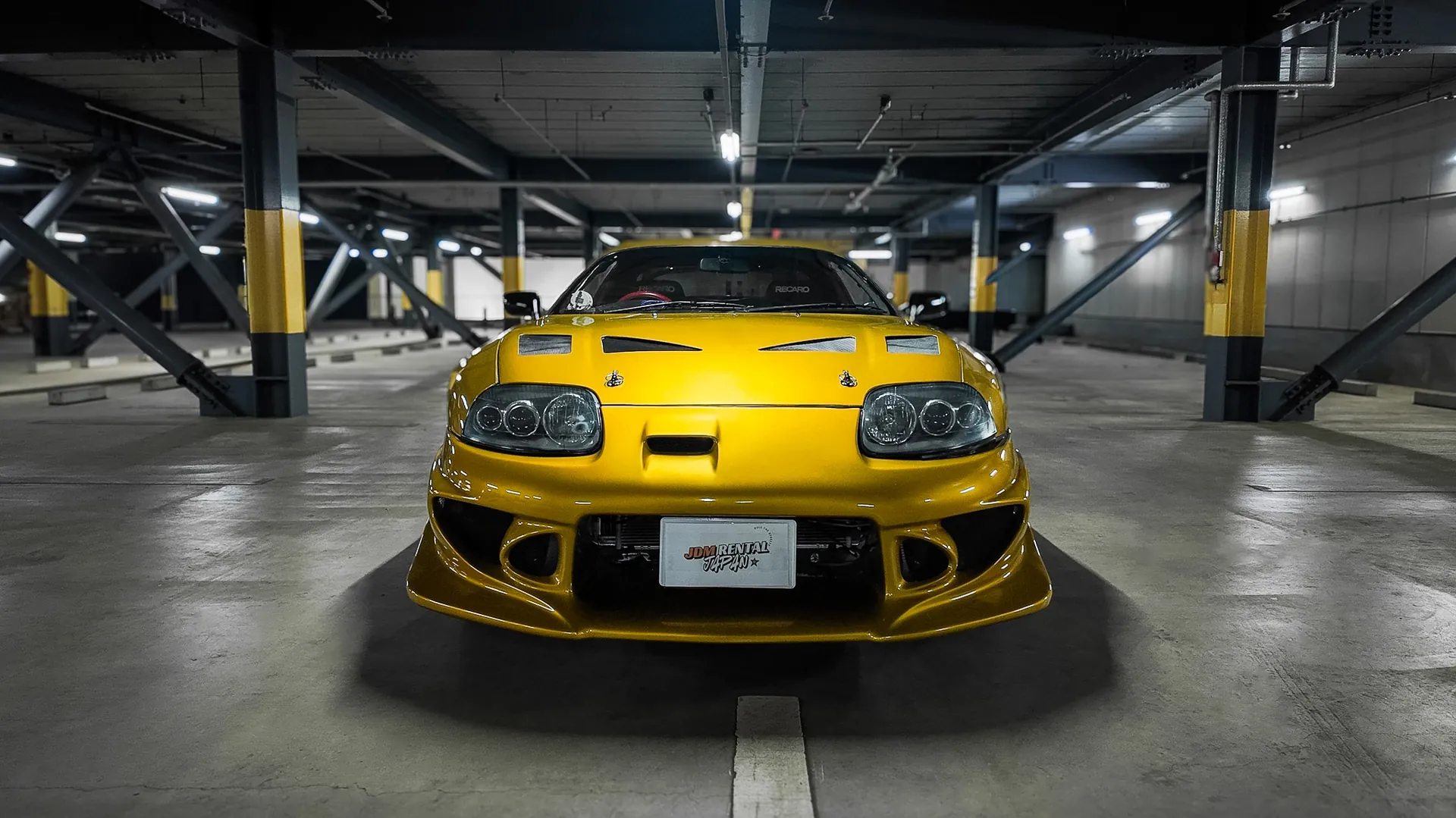
The fourth-generation Toyota Supra, commonly known as the A80 or JZA80, developed a reputation that extends far beyond its production years. Much of that attention centers around the famous 2JZ engine, but focusing only on power misses part of the story: the Supra combined a strong drivetrain with distinctive styling and a chassis that became popular across street, drag and tuning communities.
Today, experiencing a Toyota Supra JZA80 in Japan connects the modern enthusiast scene with one of the most recognizable Japanese performance platforms of the 1990s.
Mazda RX-7
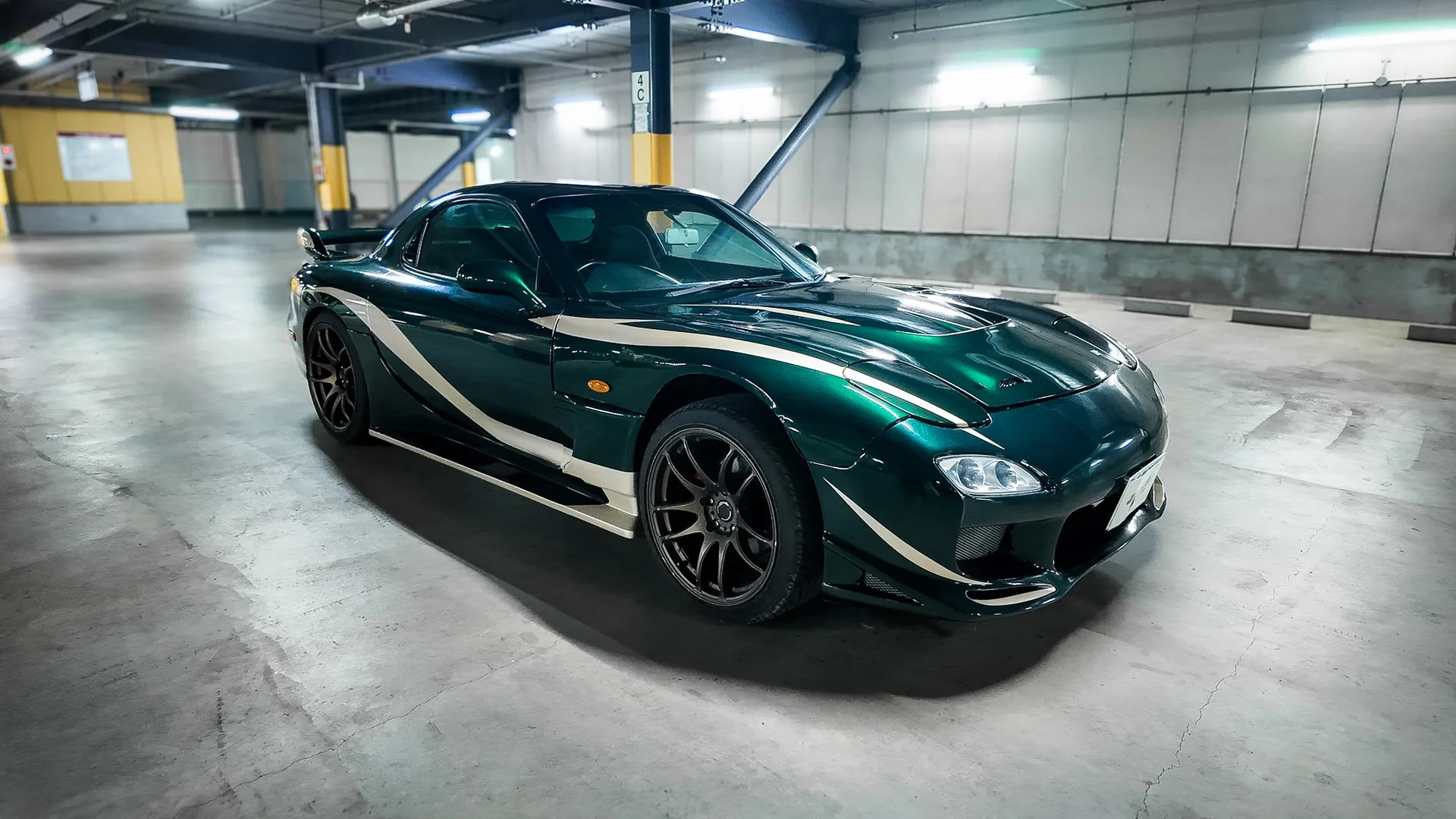
The FD-generation Mazda RX-7 followed a completely different philosophy. Instead of relying on a large conventional engine, Mazda built the RX-7 around compact rotary power and a lightweight sports-car platform. Its low proportions, responsive chassis and unique engine character gave it an identity very different from the Skyline or Supra. That variety is an important part of JDM culture, since Japanese performance cars were never built according to one formula.
Nissan Silvia
The Silvia became one of the defining cars of Japanese drift and tuning culture. S13, S14 and S15 versions remain popular because of their rear-wheel-drive layouts, responsive chassis and modification potential. They may not carry the same supercar-like reputation as the GT-R, but among drivers and tuners the Silvia has an enormous following.
Subaru Impreza WRX STI
Subaru’s performance identity developed largely around turbocharged boxer engines and all-wheel drive. The Impreza WRX STI brought rally-inspired engineering into a road-car format and built an enthusiast following that remains strong today. Where cars such as the Silvia focused on rear-wheel-drive balance, the WRX STI delivered a completely different experience built around traction and turbo performance.
Mitsubishi Lancer Evolution
The Lancer Evolution followed its own rally-driven path. Compact proportions, turbocharged four-cylinder performance and an advanced all-wheel-drive platform made the Evolution one of the defining Japanese performance sedans of its generation, and its long-running rivalry with the Subaru Impreza became part of enthusiast culture in itself.
JDM vs Japanese performance car: What is the difference?
This is where discussions online often become unnecessarily complicated. In strict automotive terminology, JDM refers to the Japanese market. In everyday enthusiast conversation, however, people frequently use JDM as shorthand for Japanese performance-car culture. Both uses now exist.
If someone describes a modified Japanese sports car at a meet as “JDM style,” they are probably describing its design, parts or cultural influence rather than verifying where that exact vehicle was originally sold. That is normal enthusiast language. But if you are buying, importing, collecting or documenting a car, the distinction becomes more important, because a genuine Japanese-market model may have different chassis identification, powertrain specifications, factory options, electronics, trim, regulatory equipment and replacement parts.
For casual conversation, the wider meaning works. For ownership and vehicle history, precision matters.
Why Japanese-market versions can be so desirable
Part of JDM appeal comes from scarcity: a vehicle that was never officially sold in another market automatically becomes more interesting to enthusiasts there. But rarity alone does not explain the attraction.
Japan has historically been willing to offer very specific vehicle configurations for its home customers. That created an enormous ecosystem of unusual trim levels, compact performance cars, kei sports cars, luxury sedans, performance wagons and enthusiast variants. Some were practical, some were strange, some were extremely fast, and some would probably never have made financial sense as global products. That variety is part of what makes exploring Japanese car culture so different from simply looking at a list of famous sports cars.
JDM is more than horsepower
One mistake newcomers often make is assuming JDM culture is simply about fast cars. It isn’t. Some of the most loved Japanese vehicles are not exceptionally powerful. The Mazda Roadster/MX-5, Toyota AE86 and many lightweight Hondas earned loyal followings because of balance, response and driver involvement.
Japanese automotive culture includes several different communities: circuit racing, drifting, time attack, touge-inspired builds, VIP sedans, kei cars, classic restoration, off-road vehicles, rally cars, stance builds, factory-original collectors and modern performance cars. Someone interested in a 600-horsepower GT-R and someone restoring a tiny kei car can both be deeply involved in JDM culture, and that diversity is one reason the scene has lasted.
Why driving JDM cars in Japan feels different
Seeing these cars overseas is one experience. Driving them in the country where they were originally designed and sold adds another layer: the steering position makes sense, the road signs make sense, and the narrow roads, expressways, service areas and mountain routes become part of the car’s environment rather than a backdrop recreated somewhere else.
You also begin to understand why different Japanese cars developed such different personalities. A small, responsive sports car can feel perfectly suited to a technical road where enormous horsepower provides little advantage. A GT-R feels completely different stretching its legs on an expressway. A manual classic demands more attention in traffic than a modern automatic performance car.
For visitors considering doing more than simply looking at the cars, our complete JDM rental guide covers the practical side of choosing and driving one in Japan.
Can tourists drive JDM cars in Japan?
Yes, provided they meet Japan’s legal licensing requirements and the rental company’s conditions. The paperwork should always be checked before planning the car, because international driving requirements vary depending on where your licence was issued. The correct documentation is far more important than choosing between a Skyline, Supra or RX-7.
Once those requirements are sorted, enthusiasts can explore the current JDM rental fleet and choose a vehicle based on driving experience, transmission, passengers and trip plans rather than simply selecting the most famous badge. For a first drive, that is often the better approach: the most powerful car is not automatically the most enjoyable one.
Classic JDM vs modern JDM
JDM culture did not end with the 1990s. Classic cars receive enormous attention because the Skyline, Supra, RX-7, Silvia and Evolution generations developed legendary status, but Japanese manufacturers continue producing enthusiast vehicles. Modern performance platforms combine the principles people associate with Japanese engineering with newer safety systems, stronger chassis, turbocharged engines and far more sophisticated electronics, which creates two very different experiences.
Classic JDM cars
Classic Japanese performance cars tend to offer simpler interiors, more mechanical feedback, older turbo technology, fewer driver-assistance systems, stronger nostalgia and more noticeable age-related character. Driving one can feel raw compared with a modern car. That is often exactly the point.
Modern Japanese performance cars
Modern JDM and Japanese performance vehicles tend to offer stronger safety systems, better everyday comfort, modern infotainment, improved chassis stiffness, advanced turbocharging and more predictable performance. Neither category is automatically better; they simply represent different eras of Japanese automotive engineering.
Why JDM cars became global cultural icons
JDM cars succeeded internationally because several worlds collided at the right time. Japan created interesting performance platforms, motorsport demonstrated what some of those platforms could do, and tuning companies showed how far they could be modified. Games placed them inside millions of homes, films made them recognizable to mainstream audiences, and internet communities then turned previously obscure chassis codes and engine names into global enthusiast vocabulary.
Suddenly, terms such as RB26, 2JZ, SR20, EJ20, 4G63 and rotary were understood by people thousands of kilometers away from Japan. The cars became more than products. They became characters. That is why someone can see the silhouette of an R34 or FD RX-7 today and immediately know what they are looking at.
Is JDM still relevant today?
Absolutely. The scene has changed, but interest has not disappeared. Classic models are becoming collectible, modern Japanese performance cars are developing their own followings, and international enthusiasts continue travelling to Japan specifically to visit car-related destinations, attend events, shop for parts or experience cars they grew up seeing online.
At the same time, the meaning of JDM has broadened culturally. For one person, JDM means an original Japanese-market Skyline. For another, it means modifying a Honda using Japanese parts. For someone else, it means standing at a Japanese parking area at night surrounded by cars they have followed online for years. The technical definition still matters, but the culture has grown much larger than the acronym.
Want to experience JDM rather than just read about it?
Understanding what JDM means is easy. Understanding why these cars developed such a following becomes much clearer from behind the wheel.
A Skyline, Supra, RX-7, Silvia or WRX does not deliver the same experience simply because each falls under the broad Japanese-performance umbrella. Their engines, drivetrains, driving positions and personalities are completely different. That variety is the real attraction.
JDM Rental Japan gives enthusiasts the opportunity to experience Japanese performance cars on the roads that helped shape the culture around them. Choose the car that fits the experience you actually want, not simply the one with the most famous name.
Frequently asked questions about JDM cars
What does JDM mean?
JDM stands for Japanese Domestic Market. In the automotive world, it describes vehicles and parts originally produced or configured for sale in Japan.
Does JDM mean any Japanese car?
No. A vehicle from a Japanese manufacturer is not automatically JDM. Technically, the vehicle must have been intended for Japan’s domestic market.
Are all JDM cars right-hand drive?
Most Japanese domestic vehicles are right-hand drive because Japan drives on the left. However, right-hand drive alone does not prove that a vehicle is JDM.
Why are JDM cars so popular?
JDM cars became popular through a combination of distinctive engineering, motorsport, tuning culture, limited overseas availability, video games, automotive media and films.
What are the most famous JDM cars?
Some of the most recognized Japanese performance cars include the Nissan Skyline GT-R, Toyota Supra, Mazda RX-7, Nissan Silvia, Mitsubishi Lancer Evolution, Subaru Impreza WRX STI, Honda NSX and Honda Civic Type R.
Are JDM cars only old cars?
No. JDM refers to a market rather than an era. Both classic and modern vehicles can be JDM if they were produced for Japan’s domestic market.
Can tourists rent JDM cars in Japan?
Yes, tourists who meet Japan’s licensing requirements and the rental company’s conditions can rent Japanese performance vehicles. Always confirm your driving documents before booking.